
Key Factors to Consider When Selecting a Paint Roller
Choosing the right paint roller is essential for achieving a smooth, professional finish and efficient coverage. Whether you are a DIY enthusiast or a professional painter, the type of roller you select can greatly influence the ease of application, paint consumption, and overall results. A well-chosen Paint Roller allows for even paint distribution, reduces streaks, and ensures consistent coverage on various surfaces.
For those seeking high-quality rollers and painting tools, platforms like Paint Roller provide a wide range of options designed to suit different surfaces, paint types, and project needs. Using the right roller not only improves efficiency but also contributes to a professional and durable finish.
Surface Type and Texture
One of the most important factors to consider is the type of surface you are painting. Different surfaces require rollers with specific nap lengths and materials to achieve optimal coverage.
- Smooth Surfaces: For walls, ceilings, and furniture with a smooth finish, a short nap roller (1/4 to 3/8 inch) works best. This allows for precise application and minimal texture.
- Semi-Smooth Surfaces: Medium nap rollers (1/2 inch) are suitable for lightly textured surfaces, providing even coverage without leaving streaks.
- Rough or Textured Surfaces: For brick, concrete, or stucco, long nap rollers (3/4 inch or more) are ideal. They hold more paint and reach into crevices, ensuring complete coverage.
Matching the roller to the surface helps prevent missed spots and ensures that the paint adheres evenly.
Roller Material
The material of the roller cover affects paint retention, application smoothness, and compatibility with different paint types. Common materials include:
- Synthetic Fibers: Suitable for water-based or latex paints, synthetic rollers are durable, easy to clean, and maintain shape during use.
- Natural Fibers: Ideal for oil-based paints, natural fibers provide excellent paint absorption and release, creating a smooth, professional finish.
- Blended Fibers: Offer versatility, working well with both water-based and oil-based paints while maintaining good coverage and texture.
Choosing the right material ensures efficient paint application and a high-quality finish.
Roller Size and Diameter
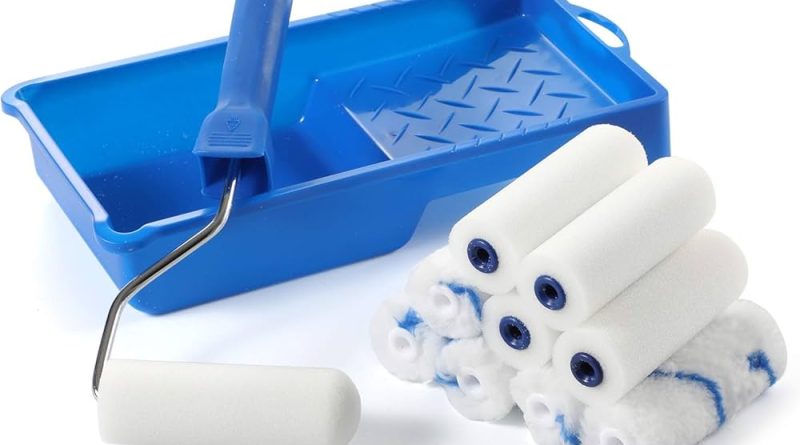
The size of the roller determines how quickly you can cover a surface. Standard rollers are typically 9 inches wide and ideal for most walls and ceilings. Mini rollers (4 to 6 inches) are better for tight spaces, corners, or small furniture pieces. Larger rollers can speed up coverage on broad, open areas but may be harder to control on detailed sections. Selecting the appropriate roller size balances speed and precision for your specific project.
Paint Retention and Coverage
High-quality rollers are designed to hold an adequate amount of paint, reducing the need for frequent reloading. Rollers with better paint retention allow for longer strokes and even coverage, preventing streaks and uneven layers. Consider a roller that balances absorption and release to maximize efficiency and achieve a professional result.
Ease of Cleaning and Maintenance
Proper cleaning and maintenance extend the life of your paint roller. Synthetic rollers are easier to clean after using water-based paints, while natural fiber rollers require solvents for oil-based paints. A roller that can be cleaned and reused saves money and ensures consistent performance over multiple projects.
Frame and Handle Quality
The roller frame and handle affect comfort and control during painting. Ergonomic handles reduce hand fatigue, especially during long projects, and provide better maneuverability. Sturdy frames prevent wobbling or bending, ensuring smooth strokes and even paint distribution.
Project-Specific Considerations
Consider the scope and nature of your project when selecting a paint roller. For large wall surfaces, opt for a roller that balances coverage speed with smooth application. For detailed or intricate surfaces, mini rollers or specialized shapes may be necessary to reach corners and edges effectively. Additionally, consider compatibility with extension poles for ceilings or high walls to improve accessibility and efficiency.
Final Thoughts
Selecting the right Paint Roller is critical for achieving a professional-looking finish and maximizing efficiency. By considering surface type, roller material, size, paint retention, ease of cleaning, and handle quality, painters can ensure smooth, even coverage and reduce project time. High-quality rollers, combined with proper technique and preparation, result in durable, visually appealing finishes that enhance the overall quality of any painting project. Investing time in choosing the right roller pays off with superior results and a more enjoyable painting experience.