
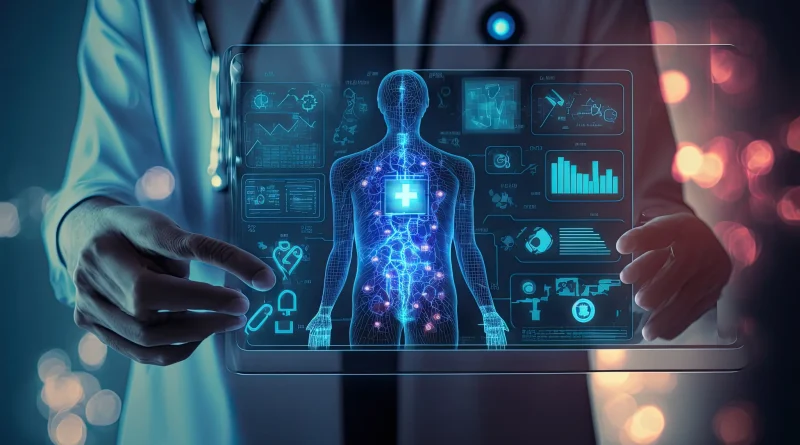
Healthcare Machine Learning: The Backbone of Smart Diagnosis
Healthcare Machine Learning (ML) refers to the use of data-driven algorithms and predictive models that enable computers to analyze medical information, recognize patterns, and make intelligent decisions. Unlike traditional programming, where systems follow fixed instructions, ML adapts and improves with experience. This adaptability is what makes it particularly powerful in the medical field. From diagnosing diseases earlier to predicting patient outcomes, machine learning is transforming how Healthcare Machine Learning systems operate.
In the past, doctors relied heavily on manual assessments and experience-based decision-making. Today, vast amounts of patient data, medical imaging, and clinical histories are processed by ML algorithms to deliver faster, more accurate insights. This integration of human expertise with machine precision is reshaping modern medicine, leading to smarter, more data-driven diagnostics.
The Role of Machine Learning in Diagnosis
The diagnostic process has always been one of the most critical stages in healthcare. Machine learning enhances this process by analyzing data that would be impossible for humans to process at the same speed or depth. Algorithms can detect subtle patterns in imaging scans or lab reports that might go unnoticed by the human eye.
In radiology, ML models are being trained on millions of medical images to identify signs of cancer, fractures, or infections earlier and with high accuracy. In pathology, digital slides of tissue samples are analyzed by algorithms to detect abnormal cells. Even in cardiology, predictive models help identify potential heart conditions before symptoms fully develop.
Machine learning also plays a crucial role in reducing diagnostic errors—a significant cause of medical complications globally. By cross-referencing patient data, lab results, and medical literature, ML systems assist doctors in making evidence-based diagnoses that minimize human bias or oversight.
Predictive Analytics and Early Disease Detection
Predictive analytics powered by ML helps forecast diseases before they appear. By studying historical patient data, genetics, and lifestyle factors, algorithms can predict an individual’s likelihood of developing certain conditions such as diabetes, heart disease, or Alzheimer’s.
These predictive tools are especially valuable for preventive medicine. Instead of reacting to illness, healthcare systems can take proactive steps. For example, wearable devices now use machine learning to track vital signs in real time and alert users or doctors to irregular patterns. Such continuous monitoring allows early intervention, potentially saving lives and reducing hospital admissions.
Hospitals and research institutions use these models to identify at-risk populations, optimize treatment plans, and allocate resources efficiently. The ability to anticipate and prevent diseases rather than merely treat them represents one of the most profound shifts in modern healthcare.
Enhancing Medical Imaging and Diagnostic Accuracy
Medical imaging is one of the areas most transformed by machine learning. Advanced ML techniques, including deep learning, are used to enhance image clarity, segment organs or tumors, and automate the detection of abnormalities. These technologies not only increase accuracy but also speed up diagnostic workflows.
For instance, in oncology, ML models trained on thousands of CT or MRI scans can help detect early-stage tumors that might be too small for the human eye to notice. Similarly, in ophthalmology, algorithms analyze retinal images to detect diabetic retinopathy in its earliest stages. These models learn continuously from new data, improving their diagnostic precision over time.
Machine learning also supports radiologists by prioritizing urgent cases, reducing workloads, and improving consistency in image interpretation. The collaboration between human expertise and algorithmic intelligence creates a hybrid diagnostic approach that is both efficient and reliable.
Personalization of Treatment through Machine Learning
Beyond diagnosis, machine learning contributes significantly to personalized treatment plans. Every patient’s genetic makeup, lifestyle, and medical history are unique, and ML enables the creation of tailored therapies that address individual needs.
In oncology, algorithms analyze genetic profiles to determine which treatments will be most effective for specific patients. In chronic disease management, ML helps adjust medication dosages based on real-time patient data. These intelligent systems continuously learn and adapt, ensuring that care remains dynamic and personalized.
Moreover, ML enhances clinical decision support systems by providing real-time recommendations to healthcare professionals. By integrating various data sources—lab results, clinical notes, and research findings—these tools help doctors choose optimal treatments while minimizing risks or side effects.
Overcoming Challenges and Ethical Considerations
While the benefits of healthcare machine learning are vast, its implementation comes with challenges. Data privacy remains a top concern, as sensitive patient information must be handled securely. Regulatory frameworks are evolving to ensure that AI systems meet strict ethical and safety standards.
Bias in training data is another issue that can affect diagnostic accuracy. If algorithms are trained on unrepresentative datasets, their predictions may not be reliable for all populations. To counter this, researchers are focusing on developing more diverse and inclusive datasets to improve fairness in medical AI systems.
Additionally, healthcare professionals must be trained to interpret AI-generated insights effectively. Machine learning should support—not replace—clinical judgment, ensuring that human empathy and understanding remain central to patient care.
The Future of Healthcare Machine Learning
The future of machine learning in healthcare is bright and full of potential. As computational power grows and data becomes more accessible, AI-driven diagnostics will only become more accurate and faster. Integration with technologies like genomics, wearable sensors, and digital health platforms will further expand ML’s role in predictive and preventive medicine.
Hospitals and research centers are increasingly adopting AI-powered tools to improve diagnostic workflows, reduce human error, and deliver patient-centered care. With continuous innovation, the day is not far when machine learning will be seamlessly embedded into every step of the healthcare journey—from prevention to diagnosis to treatment.
Volv Global SA: Pioneering AI-Driven Healthcare Innovation
Volv Global SA, based in Epalinges, Switzerland, stands at the forefront of healthcare innovation. The company specializes in using artificial intelligence and machine learning to enhance clinical development, early disease detection, and diagnostic accuracy. Through its advanced data analytics platforms, Volv Global SA empowers healthcare organizations to harness real-world evidence for smarter, faster decision-making.
Its mission is to bridge the gap between medical research and practical application by turning complex data into actionable insights. By combining deep expertise in AI with a strong commitment to ethical innovation, Volv Global SA continues to redefine the future of intelligent, data-driven healthcare solutions worldwide.


