
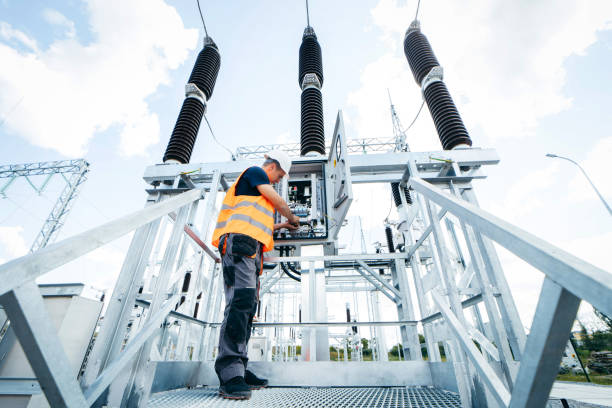
Power Transformers in the UAE: Design Requirements for Harsh Operating Conditions
The United Arab Emirates has become one of the most dynamic power markets in the Middle East. Rapid urban development, large-scale infrastructure projects, renewable energy expansion, and industrial growth have created continuous demand for robust and reliable power transmission systems. At the heart of this network are power transformers, critical assets that must perform consistently in one of the harshest operating environments in the world.
Designing and supplying transformers for the UAE is not a routine exercise. The environmental and grid conditions demand engineering precision, strict compliance with international standards, and careful adaptation to regional challenges. For any experienced power transformer manufacturer, the UAE market requires a clear understanding of climate, grid behavior, and long-term operational expectations.
Why Are Transformers in the UAE Exposed to Greater Stress?
Unlike temperate regions, transformers in the UAE operate under extreme ambient temperatures that often exceed 50°C during peak summer months. High solar radiation, desert dust, sandstorms, and coastal humidity in certain regions further complicate the operational environment.
These conditions introduce several stress factors:
- Elevated operating temperatures that accelerate insulation aging
- Dust accumulation that impacts cooling efficiency
- High humidity and salinity near coastal installations leading to corrosion
- Load fluctuations due to rapid urban and industrial demand cycles
As a result, transformers deployed in this region must be engineered with enhanced thermal performance, corrosion-resistant materials, and optimized cooling systems.
Thermal Design: The First Line of Defense
Temperature management is one of the most critical aspects of transformer design in the Gulf region. Standard designs suitable for moderate climates are often insufficient for Middle Eastern conditions.
Transformers intended for UAE installations are typically designed with higher temperature rise margins or de-rated to handle extreme ambient conditions without compromising lifespan. Advanced cooling configurations such as ONAN/ONAF or OFAF are frequently selected depending on load requirements and grid specifications.
Oil quality and circulation efficiency are equally important. High-grade insulating oil with superior oxidation stability is preferred, especially where long service intervals are expected. Modern design practices also emphasize improved winding configurations that reduce hotspot temperatures and enhance overall thermal balance.
A reliable high voltage transformer manufacturer supplying to the region understands that even small deviations in thermal design can significantly affect asset longevity.
How Does Desert Dust Impact Transformer Performance?
Dust and sand are constant challenges in the UAE. Fine desert particles can accumulate on radiators, cooling fins, bushings, and external surfaces, reducing heat dissipation efficiency. Over time, this can raise operating temperatures and increase maintenance frequency.
To mitigate these risks, transformers are often supplied with:
- Enhanced surface coatings resistant to abrasion
- Improved sealing systems to prevent ingress
- Optimized radiator spacing for easier cleaning
- High creepage distance bushings to reduce flashover risk
Regular cleaning schedules are part of operational best practices, but design-level prevention remains the most effective strategy.
Corrosion Protection in Coastal Areas
While inland installations face dust challenges, coastal regions introduce another risk—corrosion caused by high salinity and humidity. Substations located near ports or along the shoreline require specialized protective measures.
Manufacturers typically apply multi-layer anti-corrosive coatings and use stainless steel hardware where necessary. Tank fabrication standards are closely controlled to prevent premature degradation. Even small accessories, such as cable boxes and conservators, must meet higher corrosion resistance benchmarks.
A reputable power transformer manufacturer supplying to international markets ensures compliance with global coating standards and conducts salt spray testing when required.
Grid Stability and Load Variations
The UAE grid is highly developed and continues to expand with renewable integration. Large solar projects, combined-cycle plants, desalination facilities, and data centers introduce dynamic loading patterns. Transformers must be designed to withstand short-circuit stresses, voltage fluctuations, and harmonic distortion.
Mechanical strength of windings becomes especially important during fault conditions. Advanced clamping systems, robust core structures, and precise short-circuit testing are essential to ensure mechanical integrity.
Modern utilities also increasingly require detailed design validation through simulation tools. Digital modeling and thermal mapping are now standard practice among established high voltage transformer manufacturers serving demanding markets.
Compliance with International Standards
The UAE power sector adheres closely to international standards such as IEC and other recognized specifications. In addition, utilities may have their own technical requirements covering temperature rise limits, noise levels, and insulation classes.
Manufacturers supplying to this region must demonstrate:
- Routine and type testing at accredited laboratories
- Short-circuit withstand capability validation
- Impulse voltage testing
- Comprehensive quality control documentation
Quality assurance is not merely a procedural formality—it directly impacts project approvals and long-term reliability.
Sustainability and Efficiency Expectations
Energy efficiency has become a key consideration in transformer procurement. Utilities are increasingly focused on minimizing no-load and load losses to improve overall grid efficiency. Eco-design considerations, improved core materials, and advanced manufacturing precision contribute to reduced losses.
Environmental considerations also influence insulating oil selection and noise emission limits, particularly for installations in urban areas.
As renewable energy integration grows, transformer design must also accommodate reverse power flows and voltage variability associated with distributed generation.
Long-Term Reliability: The Ultimate Objective
In the UAE’s climate, transformer downtime is not just inconvenient, it can significantly impact commercial, industrial, and residential operations. Therefore, long-term reliability is the central design goal.
This involves:
- Careful material selection
- Precision manufacturing processes
- Strict quality control
- Detailed factory acceptance testing
- Comprehensive documentation
When these elements align, transformers can operate efficiently for decades, even under extreme environmental stress.
FAQs
1. What makes transformer design in the UAE different from other regions?
Transformers in the UAE must withstand extreme ambient temperatures, desert dust, and in some areas high salinity. This requires enhanced thermal design, improved sealing systems, and superior corrosion protection compared to standard designs used in milder climates.
2. How do high temperatures affect transformer lifespan?
Higher operating temperatures accelerate insulation aging, which can reduce transformer life. Proper cooling system design, de-rating strategies, and high-quality insulating materials help mitigate this impact and maintain expected service life.
3. Why is corrosion protection important for coastal installations?
Salt-laden air can corrode metal components and reduce structural integrity over time. Specialized coatings, stainless hardware, and controlled fabrication processes are essential to ensure durability in coastal environments.
4. What standards must transformers meet in the UAE?
Transformers typically comply with IEC standards and specific utility technical specifications. These include requirements for temperature rise, short-circuit withstand capability, impulse testing, and performance efficiency.
5. How do manufacturers ensure reliability under desert conditions?
Reliable manufacturers implement strict design validation, advanced thermal modeling, high-quality materials, and comprehensive testing procedures. Regular maintenance planning and appropriate surface protection also contribute to long-term performance.


