
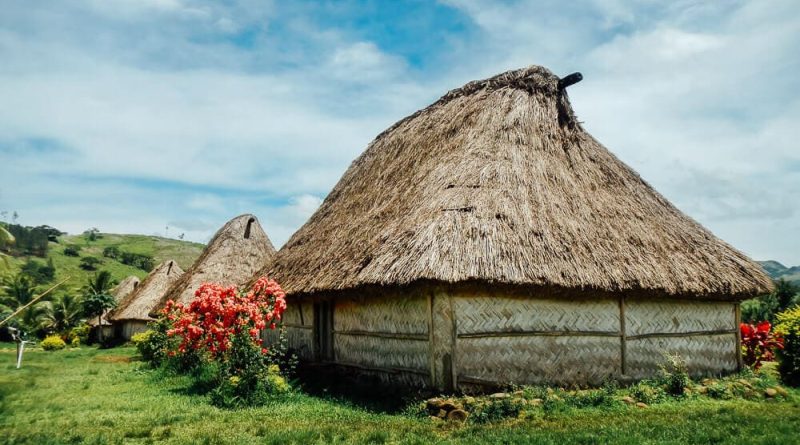
The People of Fiji Culture Traditions and Daily Life
Fiji has a beautiful ocean and comfy islands encircled by palm trees. This charm is only furthered by the wonderful community who work and dwell on the islands. Fijians are multicultural and are warm and nice. Fijians are community-oriented and value living close on the same island. They also value custom. People in Fiji devote themselves to community customs, and ancestral worship. Knowing the people and the values that guide their lives is the key to knowing Fiji.
Diversity
Fiji has been multi-ethnic for many years. The first Fijians, or iTaukei, are descendants of the Melanesian settlers who arrived in the islands millennia ago. The culture of these settlers is postured around village sharing, and eco-spirituality.
Indo-Fijians are the other major ethnic group in the population. Their ancestors came as contract workers during the British colonial era. After successive generations, the Indo-Fijians have become the driving force of the social, economic, and cultural life of Fiji. In these two main districts, there also live a few European, Chinese, and mixed-heritage people groups. The presence of such a community has created a society that can easily accommodate different traditions and still be loyal to the Indigenous ways.
The Center of Fijian Culture
Fijian culture is all about respect, being humble, and sticking together. The local culture really values the idea of vanua. Vanua represents more than simply light. It covers the people, the customs, the ancestors, and the spiritual beliefs. It suggests that human beings are the stewards of the earth and are responsible for the well-being of their inhabitants.
Respecting old people is an attitude which is learned through the way people live their life. Old people are seen as the main providers of knowledge and support. Good manners, being attentive and showing modesty are some of the things that parents teach their children from the very beginning of life. These are some of the basic matters that most of the time become the characteristics of the Fijians’ way of socializing, not only at home but also in the village and public life.
Family and Community Life
Family is the core that supports the Fijian society. Extended families are often living in the vicinity of each other, dividing daily work among themselves and being there for one another not only in times of joy but also in times of trouble. Kids are brought up not only by their parents but also by their grandparents, aunts, uncles, and older brothers, and sisters. This joint parenting method leads to the kids developing a feeling of being part of the community and of safety.
Life in a village is revolving around working together. The villagers do the work such as farming, fishing, building, and preparing for an event together. Community gatherings are often held as a matter of routine and decisions are made by consensus. Anyone coming to the village will be met with great warmth and kindness, given food, invited to speak, and provided with a place to rest because hospitality is one of the things the people have inherited from their ancestors and it is deeply rooted in their culture.
Language and Communication
Language is one of the most significant things that determine the cultural identity. Fijian is spoken by almost everyone as well as English, and Fiji Hindi is mainly spoken by the Indo Fijians community. The Fijian tongue is not only a means of communication but it also carries a lot of cultural significance especially in traditional areas where a formal way of speaking and respectful expressions are used.
Interactions in Fijian culture are of the soft and considerate kind. The way one speaks, one’s stance, and patience are very important, especially when speaking to seniors or neighborhood heads. Speaking and listening, the latter being just as important as the former which means that the communicators agree with each other and understand each other, are the communication skills that Fijians use.
Religion and Spiritual Life
Religion is very important to many Fijians. Most Fijians of Indigenous descent practice Christianity. Therefore, church-related activities are major to the town’s energy. Usually, Sundays are a day off from work and are used to go to church, sitting down to have a meal together, and relaxing. Many business units also choose to close down for the day.
Associates of the Hindu, Muslim, and Sikh residents among the Indo Fijians practice their religions respectively. They undertake various festivals, prayers, and rituals with full dedication and also, they are usually available to the broader society. The different traditional beliefs amongst the people do not stop them from respecting each and every one of their faiths which contributes to the harmonious social coexistence of the people.
Social Norms and Folklore
Fijian culture has many important ceremonies, but kava ceremonies are real standouts. People really enjoy them. They’re unique, like nothing else you will see. Preparing kava is a pretty big deal. Locals grind the heart of the yaqona works to prepare this drink. But kava isn’t just something you sip for fun. It’s what you offer guests, what you share when you’re patching things up, or when you want to honor memories. The whole process is respectful, almost sacred. It pulls everyone together and reminds people of the trust they share.
Food and Everyday Living
Food has forever been a part of Fijian life and remains at the core of Fijian living and socializing. The traditional meals consist of root crops that are taro and cassava, fish that is freshly caught, food that is made from the milk of a coconut, and fruits that are of the season. One of the traditional methods by which Fijians cook their food is the lovo, in which the food is first wrapped and then cooked underground using hot stones to provide the heat. If lovo foods are there, this naturally means that an occasion or a gathering is there for which the food has been prepared.
Sharing meals is a practice that is very much adhered to and it is a reflection of the value that togetherness has been attributed. Whether it is in villages that are far away from the cities or in homes that are situated in towns, the act of eating together is, indeed, one of the ways by which the family bonds are tightened, and the community spirit is promoted.
Modern Life and Cultural Balance
The life in Fiji has been influenced by the modern changes mostly in urban areas such as cities and towns. With education, technology, and exposure to the rest of the world, young Fijians have many new prospects. Some choose to have careers, attend university, and live modern lifestyles, but still hold on to their traditional values.
The balancing of tradition and modern life is a continuous challenge. One can still see the traditions through cultural events, speaking the native language, and performing community rituals. Even though the lifestyles are different, people are still very much alive with the cultural identity in that they respect the elders, they are united as one family, and they are proud of their culture.
Conclusion
The people of Fiji are in fact the heart of the country. The locals’ friendliness, their strong communal spirit, and their honoring of the age-old customs are the things which, besides the islands’ natural beauty, define the life. Fijian people are caught between past and future but still they are firm in their values while they are letting the modern world in. Knowing their culture, lifestyle, and faith will give you not only a deeper understanding of Fiji as a mere location but also a living and vibrant community based on unity, respect, and the common humanity.