
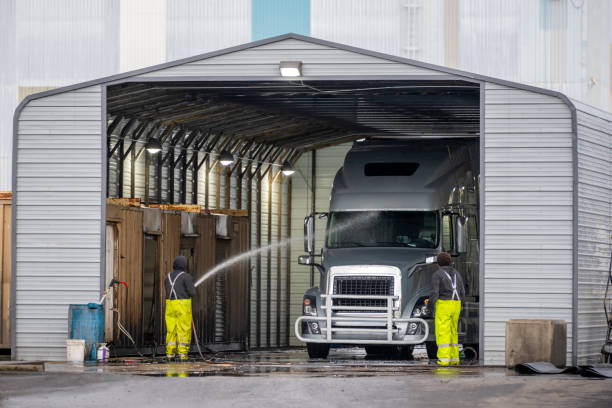
Why Fleet Washing Plays a Key Role in Business Scalability
As businesses grow, their operations become more complex. This is especially true for companies that rely on fleets—whether for logistics, delivery, transportation, or rental services. While scaling typically focuses on adding more vehicles, routes, and staff, one operational area often gets overlooked: vehicle washing.
What starts as a manageable task for a small fleet can quickly become a major operational challenge as the business expands. Without the right systems in place, cleaning can slow down operations, increase costs, and create inconsistencies across the fleet.
Small Fleet vs Large Fleet Reality
In smaller operations, washing is often informal. Vehicles may be cleaned manually or outsourced occasionally. At this stage, flexibility is manageable.
However, as fleet size increases, this approach begins to break down. Larger fleets face challenges such as:
- Increased time required to clean vehicles
- Higher labor demands
- Inconsistent cleaning quality
- Scheduling conflicts between washing and operations
What worked for 5 vehicles does not scale efficiently to 50 or 100.
Washing as an Operational Bottleneck
When fleet size grows, washing can become a hidden bottleneck. Vehicles returning from routes often need to be cleaned before inspection or redeployment.
If washing is slow or unstructured:
- Vehicles wait longer in the yard
- Dispatch schedules are delayed
- Maintenance processes are pushed back
- Overall productivity drops
Even a small delay per vehicle can compound into significant operational inefficiencies across the fleet.
The Need for Structured Systems
Scaling businesses require structured processes. Just like routing systems and maintenance schedules, washing needs to be standardized.
This is where purpose-built solutions like Truck Wash Equipment become important. These systems are designed to handle high volumes while maintaining consistent results, allowing businesses to clean more vehicles without increasing complexity.
Structured systems ensure that washing becomes part of the workflow—not a disruption to it.
Consistency Across Expanding Operations
As fleets expand across multiple locations or regions, maintaining consistent standards becomes more difficult. Without a defined system, vehicle condition may vary depending on location or team.
Consistency matters because it:
- Maintains brand image across all vehicles
- Simplifies maintenance processes
- Creates predictable operational outcomes
- Supports uniform service quality
A scalable washing setup helps enforce these standards across the entire operation.
Supporting Faster Turnaround Times
Speed is critical in fleet operations. Vehicles need to return to service quickly to maintain productivity.
Efficient washing systems help reduce:
- Idle time between routes
- Delays in inspection and maintenance
- Congestion in operational yards
Faster turnaround means more time on the road, which directly supports business growth.
Cost Control During Expansion
As operations scale, controlling costs becomes more important. Inefficient washing processes can increase:
- Labor costs
- Water and chemical usage
- Maintenance preparation time
- Rework due to inconsistent cleaning
Automated and optimized systems help keep these costs predictable and manageable, even as the fleet grows.
Adapting to Different Vehicle Types
Growing businesses often diversify their fleets. A single operation may include trucks, vans, buses, and specialized vehicles.
A scalable washing solution must adapt to these variations without requiring separate processes for each vehicle type. This flexibility allows businesses to expand their services without overcomplicating operations.
Long-Term Infrastructure Thinking
One of the biggest mistakes growing fleets make is treating washing as a short-term need rather than long-term infrastructure.
Planning for scalability includes:
- Anticipating future fleet size
- Designing efficient vehicle flow
- Ensuring adequate capacity for peak demand
- Integrating washing with maintenance workflows
Businesses that plan ahead avoid costly upgrades and operational disruptions later.
Turning Washing Into a Growth Enabler
At scale, even simple processes have a significant impact. Washing is no exception.
When managed properly, it:
- Supports faster operations
- Maintains consistent standards
- Reduces operational friction
- Protects vehicle condition
Instead of being a routine task, washing becomes a system that supports growth.
Final Thoughts
Scaling a fleet operation involves more than adding vehicles—it requires strengthening the systems that support those vehicles. Washing is one of those systems.
By investing in efficient, structured solutions early, businesses can avoid bottlenecks, maintain consistency, and support long-term expansion.
In growing fleet operations, the difference between smooth scaling and operational strain often comes down to how well the basics—like vehicle cleaning—are managed.