
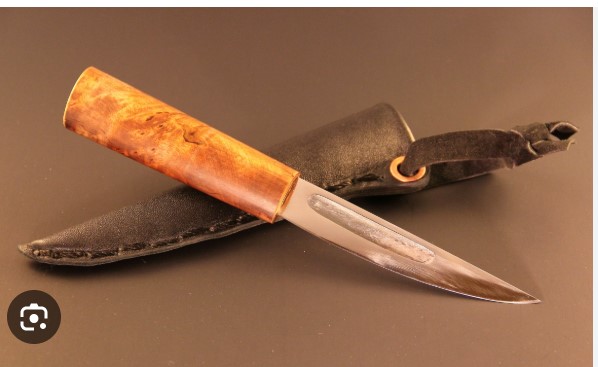
Symbolism and Cultural Meaning of the Yakut Knife Among the Sakha People
Among the Sakha people, the Yakut knife is far more than a utilitarian object. It carries deep symbolic and cultural meaning, reflecting values such as responsibility, self-reliance, respect for nature, and continuity between generations. Shaped by life in one of the harshest environments on Earth, the Yakut knife became an expression of identity as much as a tool for survival.
The Knife as a Symbol of Responsibility
In Sakha culture, the knife traditionally symbolized responsibility rather than violence. From an early age, boys were introduced to knives as working tools, not weapons. Learning to use a knife correctly marked an important step toward adulthood. It signified that a person was capable of contributing to family life—hunting, fishing, crafting, and maintaining the household.
Because of this, careless or aggressive use of a knife was culturally discouraged. Respectful handling reflected inner discipline and maturity, qualities highly valued in Sakha society.
Connection to Daily Life and Nature
The Yakut knife symbolized a close relationship with the natural world. It was used to process animals taken in hunting, prepare fish, shape wood, and perform countless everyday tasks. Each of these activities required knowledge of nature’s rhythms and resources.
The knife therefore represented balance: taking from nature only what was needed and using it wisely. This philosophy aligned with the Sakha worldview, which emphasized harmony with the environment rather than domination over it.
Spiritual and Protective Meaning
In traditional beliefs, the Yakut knife was sometimes seen as a protective object. Carrying a knife was believed to offer a sense of safety during travel, hunting, or work in remote areas. While not always linked to formal religious rituals, the knife held quiet spiritual significance as a trusted companion.
Placing a knife carelessly on the ground or treating it disrespectfully was often frowned upon, as the object was considered to hold personal and symbolic value connected to its owner.
The Knife as a Marker of Identity
Every Yakut knife was personal. Differences in handle shape, blade size, and wear reflected the owner’s lifestyle and character. Over time, a knife became associated with its user’s experiences, skills, and achievements.
Knives were often kept for decades, repaired rather than replaced. In some families, Yakut knives were passed down through generations, carrying memory and emotional significance. Such heirloom knives symbolized continuity, family ties, and respect for ancestors.
Modesty and Cultural Values
Unlike weapons in some cultures that were heavily decorated to display status, traditional Yakut knives were modest in appearance. Their beauty lay in balance, efficiency, and craftsmanship rather than ornamentation. This reflected Sakha cultural values, which favored practicality, humility, and usefulness over display.
Even when decorative elements were added, they were subtle and meaningful rather than excessive.
Survival, Identity, and Legacy
The Yakut knife embodied the Sakha approach to life: prepared, resilient, and thoughtful. It represented the ability to survive through skill rather than force, through knowledge rather than excess. In modern times, despite industrial tools and changing lifestyles, the symbolic importance of the Yakut knife remains strong.
Conclusion
For the Sakha people, the Yakut knife is not merely a blade—it is a symbol of responsibility, cultural identity, and harmony with nature. Rooted in daily life and spiritual values, it reflects centuries of experience and wisdom. The enduring respect for Yakut knives for sale highlights its role as both a practical companion and a powerful cultural symbol that continues to define Sakha heritage today.